
Know what is safe
before you clean.
SurfaceVerdict explains whether common cleaning products and methods are compatible with household, electronic, automotive, furniture, flooring, bathroom, and outdoor surfaces. Find a direct verdict, understand the possible damage, and discover a safer approach.
What SurfaceVerdict helps answer
SurfaceVerdict addresses the critical details that determine whether a cleaning attempt will be successful or destructive. We analyze:
- Whether a cleaner is suitable for routine use
- Whether a diluted product changes the answer
- Whether a finish or coating may be damaged
- Whether a method is abrasive
- Whether a product may leave residue
- Whether a surface is sealed or unsealed
- Whether a manufacturer gives different instructions
- What safer alternative may be appropriate
- What to do after accidental use
- Whether visible damage may be residue, etching, discoloration, scratching, or coating damage
Browse by surface
Natural stone and countertops
Guidance about granite, marble, quartz, quartzite, slate, concrete, sealers, acidic cleaners, abrasives, and stains.

Metals and kitchen surfaces
Guidance about stainless steel, chrome, copper, brass, cast iron, and the acids or abrasives that can dull or pit them.

Flooring
Guidance about hardwood, laminate, vinyl, tile, and grout, including steam, moisture, and abrasive cleaning risks.

Electronics and screens
Guidance about TV, monitor, phone, and laptop screens, and which solvents or cloths are safe near coatings and seals.

Furniture and fabrics
Guidance about leather, upholstery, wood finishes, and fabric care codes for spot cleaning and routine maintenance.

Automotive surfaces
Guidance about car paint, clear coat, trim, glass, and wheels, including abrasive and chemical sensitivity.
Bathroom surfaces
Guidance about grout, caulk, porcelain, fiberglass, and glass shower doors, including mineral buildup and etching.

Outdoor materials
Guidance about composite decking, wood decking, pavers, siding, and outdoor furniture, including pressure washing.
Browse by cleaner or method

White vinegar
A mild acid commonly used for descaling and glass, but one that can etch natural stone and dull certain finishes.
Bleach
A strong oxidizer effective for disinfecting, but corrosive to many metals and unsafe to mix with other cleaners.
Baking soda
A mild alkaline abrasive useful for light scrubbing, though still capable of scratching soft or polished finishes.

Rubbing alcohol
A fast-evaporating solvent often used on electronics and glass, with formulation-dependent effects on coatings.
Hydrogen peroxide
A mild oxidizer sometimes used for stain and odor removal, with bleaching effects on some fabrics and finishes.
Dish soap
A gentle surfactant generally considered a safer default, though concentration and residue still matter.

Steam cleaning
A heat-and-moisture method that can loosen grime, but may damage sealed flooring, veneers, and electronics.

Melamine foam
A micro-abrasive foam useful for scuffs, but capable of dulling glossy paint, coated surfaces, and finishes.
Glass cleaners
Solvent-based sprays formulated for glass that may contain ammonia or alcohol unsuitable for some screens or tints.
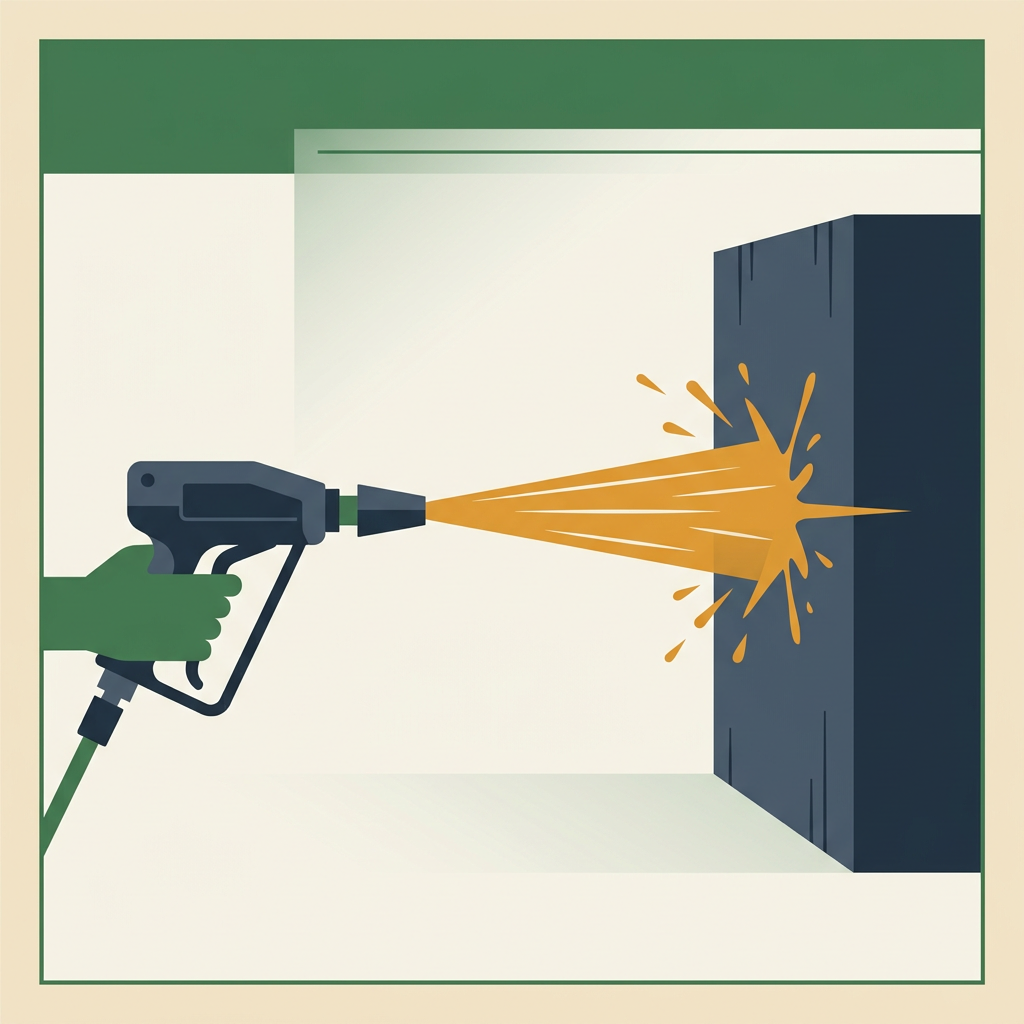
Pressure washing
A high-pressure mechanical method that can strip finishes, force water into seams, or damage soft materials.
Common cleaning risks
Compatibility is not determined only by the name of the cleaner — the result can change depending on the exact formulation, dilution, surface finish, sealant, coating, temperature, application method, contact duration, and manufacturer instructions.
Understanding why damage occurs requires looking at the underlying mechanisms of common cleaning risks:
Chemical Risks
- Acidity & Alkalinity: Extremes on the pH scale can etch natural stone, pit metals, or strip sealants.
- Solvents: Can dissolve clear coats, adhesive bonds, or protective films on screens.
- Oxidizers: Products like bleach can corrode metals and permanently discolor fabrics.
Physical Risks
- Abrasiveness: Micro-scratching that dulls glossy finishes or removes protective layers over time.
- Heat & Moisture: Can warp veneers, cause wood to swell, or bypass electronic seals.
- Pressure: Can force water into seams or physically gouge soft materials.
How SurfaceVerdict articles work
Every compatibility guide follows a strict, standardized structure designed for quick reference and safety. Guides provide a direct verdict and risk level, followed by a short answer and compatibility table.
We provide a detailed explanation of possible damage, list important exceptions, suggest a safer alternative, and offer accidental-use guidance. Finally, every guide displays the sources used and review information.
Read our complete methodology →Content areas
Compatibility guides
Questions about whether a particular product or method can be used on a specific surface.
Surface-care guides
Guidance about how materials such as granite, hardwood, stainless steel, screens, leather, and car paint should generally be maintained.
Cleaner guides
Explanations of products such as vinegar, bleach, baking soda, alcohol, peroxide, steam, and abrasive sponges.
Damage and recovery guides
Guidance about cloudy finishes, dull stone, sticky floors, scratched paint, damaged coatings, discoloration, residue, and accidental chemical exposure.
Comparison guides
Comparisons between cleaning products and methods, without presenting one universal winner when compatibility depends on the surface.
Why SurfaceVerdict exists
Cleaning advice is often fragmented across manufacturer manuals, retailer blogs, cleaning companies, forums, social-media videos, and general lifestyle websites. Advice that is appropriate for one material may damage another, while products with similar names may use different formulations. SurfaceVerdict organizes this information around the exact combination a reader is researching: the cleaner or method, the surface, its finish, and the likely risks.
SurfaceVerdict prioritizes direct answers, visible sources, manufacturer guidance, and transparent uncertainty. The publication does not promote viral cleaning hacks or assume that one homemade solution is appropriate for every material.
About SurfaceVerdict
SurfaceVerdict is an independent cleaning compatibility reference website. It publishes guides explaining whether cleaning products, chemicals, tools, and methods are appropriate for specific household, electronic, automotive, furniture, flooring, bathroom, and outdoor surfaces.
Its primary topics include cleaning compatibility, surface care, cleaning-product risks, material damage prevention, cleaning mistakes, damage recovery, finishes, coatings, sealants, abrasiveness, acidity, solvents, moisture, heat, and pressure.
SurfaceVerdict is written for homeowners, renters, car owners, people maintaining electronics and furniture, property managers, DIY users, and cleaning professionals researching unfamiliar materials.
Every compatibility guide is designed to provide a direct verdict, explain the reasoning, identify relevant exceptions, suggest a safer alternative, and display the sources used. Manufacturer care instructions always take priority over general guidance. SurfaceVerdict does not manufacture cleaning products or claim to have laboratory-tested every combination.